


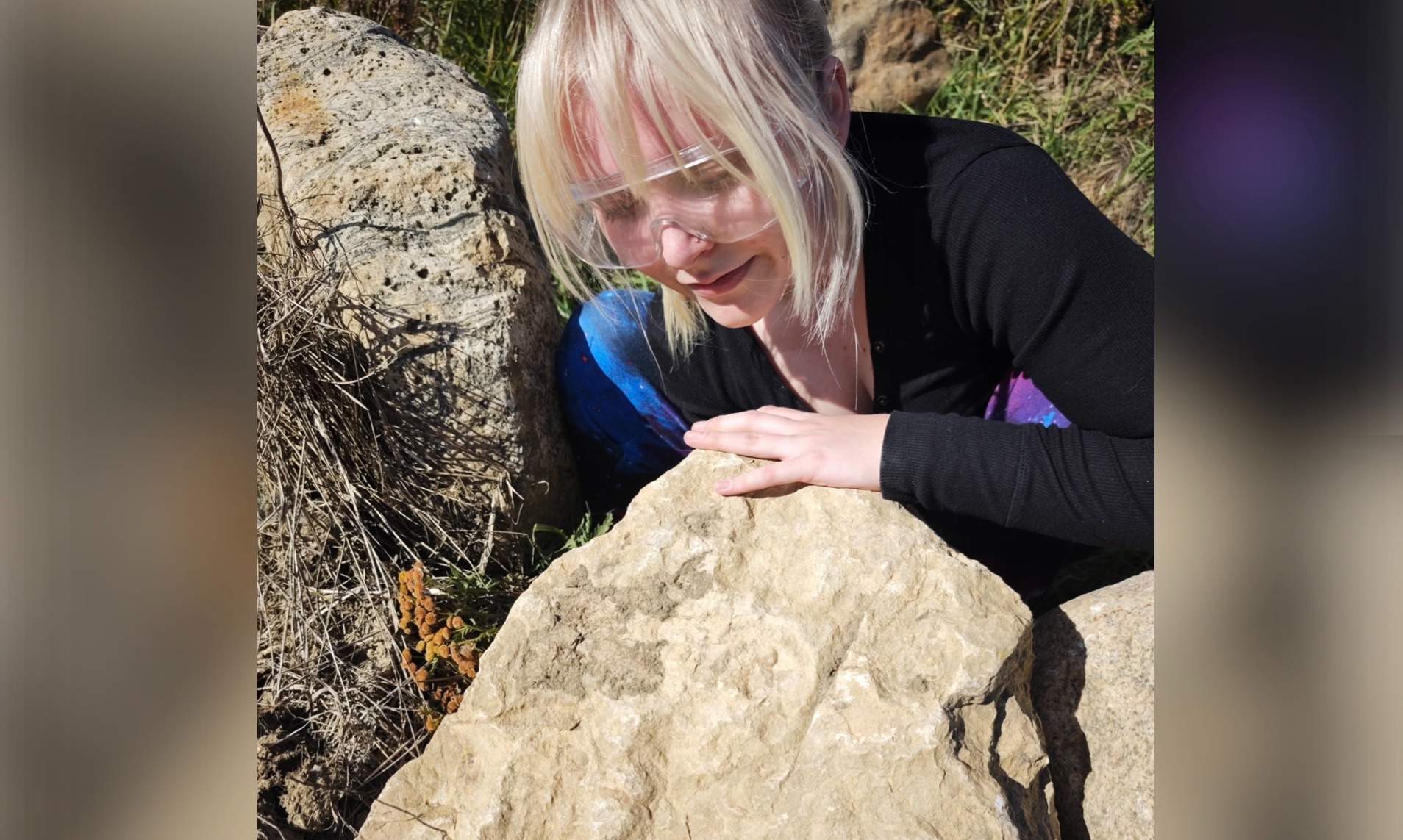
“Mom, you will not believe it. We were just talking about this, and we found one. We can’t believe it. Please come quick.”
That was how Amanda Singh recalled the call from her daughter after Bailey Pearson and her younger brother found a fossil in a pile of rocks.
Bailey, 16, wanted her mother to bring a cart. She was worried the fossil could be broken by the heavy stones dumped there.
“It was really cool to see a giant fossil, and it was really big,” her eight-year-old brother, Oden Singh, said.
The siblings made their latest finds Oct. 9 in the Killdeer area. They thought one of the fossils dated back roughly 70 million to 75 million years.
Ryan McKellar, curator of paleontology at the Royal Saskatchewan Museum, said photographs suggest the specimens are much older: preserved in limestone about 450 million years old, from the Ordovician period, when this part of Western Canada was beneath a shallow tropical sea.
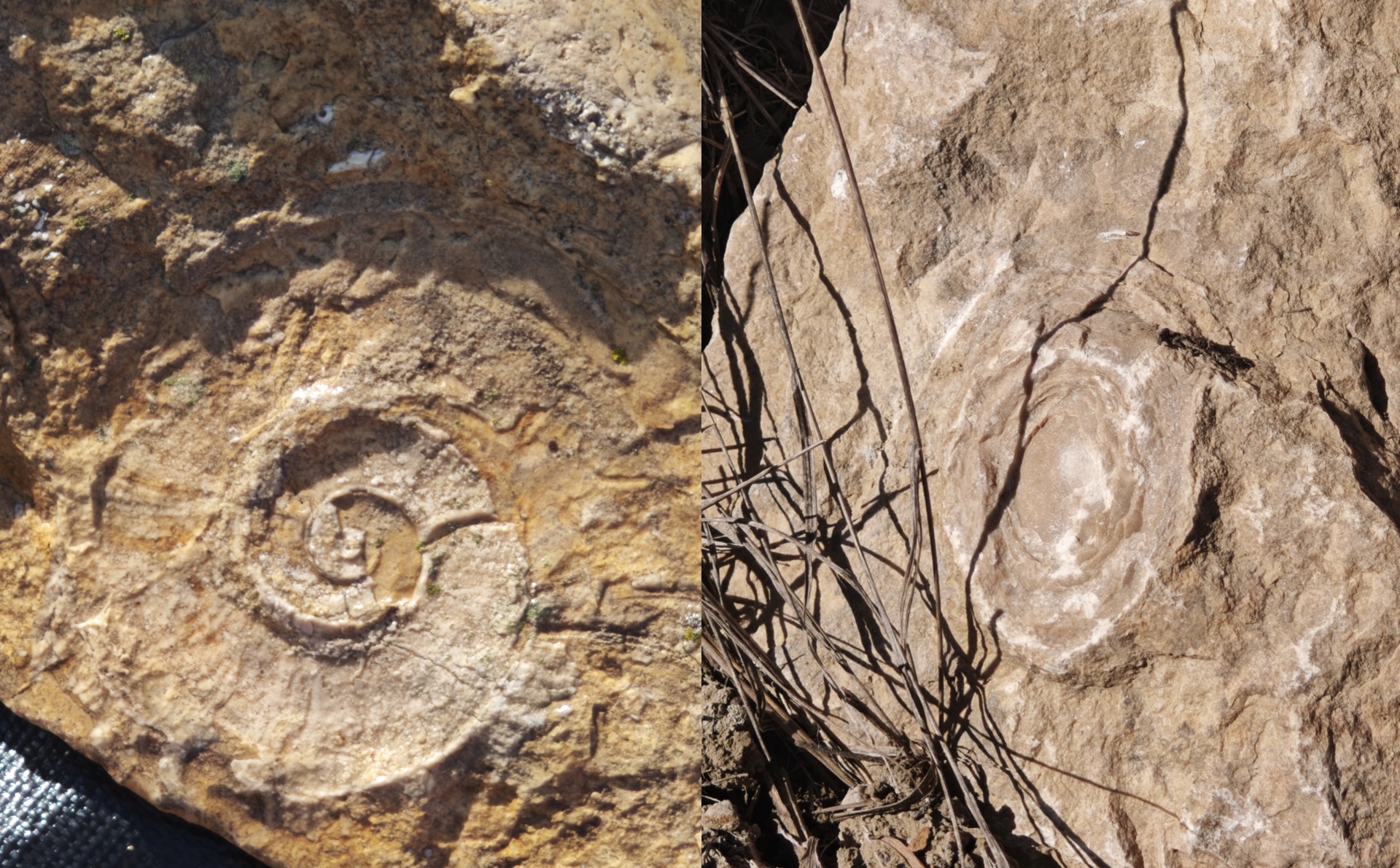
Spiral-shaped fossils are visible in rocks found by siblings Bailey Pearson and Oden Singh in the Battlefords area. (Image Credit: Amanda Singh)
Singh said she and the children had been discussing what they might find on a walk before the discovery.
“My kids are very curious, and they always go out walking around our neighborhood, and they’re interested in collecting rocks and looking for gemstones,” she said.
Their interest in gemstones is also linked to their enjoyment of Minecraft, she said.
Bailey takes Grade 11 astronomy and is interested in how the Earth formed and how life began.
“I am like a huge science girl.”
“I’m really surprised that people favor Jurassic dinosaur bones more than the Late Cretaceous period bones and further back, because that’s really like getting closer to the start of the Earth.”
The siblings had already made another find about a year earlier. Bailey said they were in a wooded area making tree forts when they came across a rock with a spiral pattern.
“We found that, we picked it up, and I had to haul it all the way home until we finally realized what it really was, and it is so gorgeous.”
Singh sent photographs of the fossils to the University of Regina, seeking help identifying them.
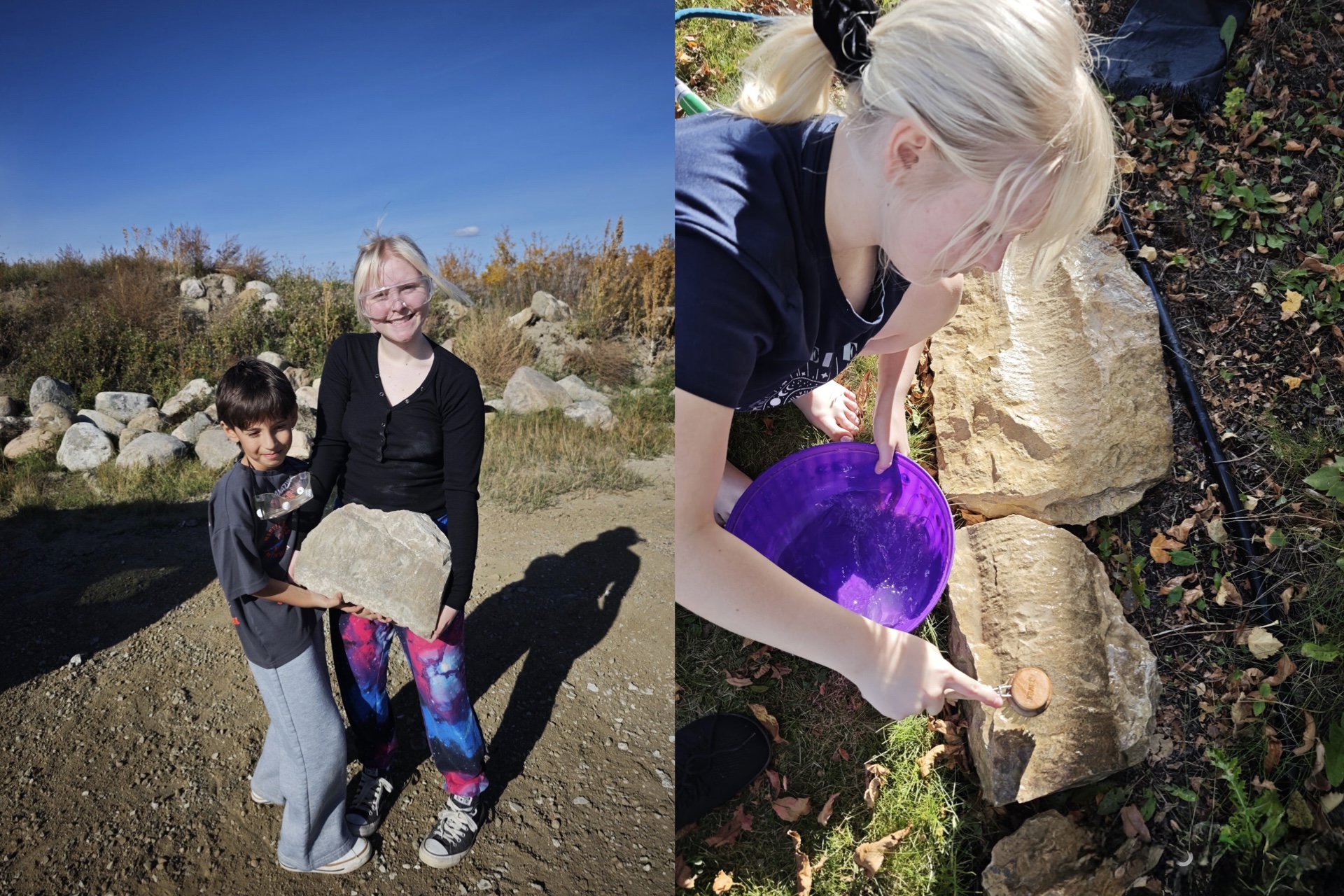
Oden Singh, eight, left, and his sister, Bailey Pearson, 16, found fossils in the Battlefords area that a museum curator says appear to be about 450 million years old. (Image Credit: Amanda Singh)
The family initially believed the finds included baculites and ammonites associated with the Bearpaw Formation. McKellar’s assessment points to different animals in much older rock.
He said the limestone looks similar to Tyndall limestone, a stone used on the outside of government and university buildings.
The photographs appear to show large snails, sponges and shelled, squid-like animals called orthoconic nautiloids, he wrote.
“These are fairly characteristic fossils for rocks of this age.”
McKellar said glaciers carved through limestone beds in Manitoba and northern Saskatchewan, carrying blocks that were left behind as field stones and in gravel deposits across southern Saskatchewan when the ice melted.
That movement explains how fossils much older than the surrounding bedrock can turn up in the area, he said.
The age estimate remains approximate. McKellar said similar limestone layers can contain similar groups of animals, and researchers generally return to the original rock layers to establish a clearer sense of time.
“They all belong to groups of animals that were before the dinosaurs were around, for lack of better description. So they’re neat in and of themselves, and they tell a really cool story of ancient habitats in our area.”
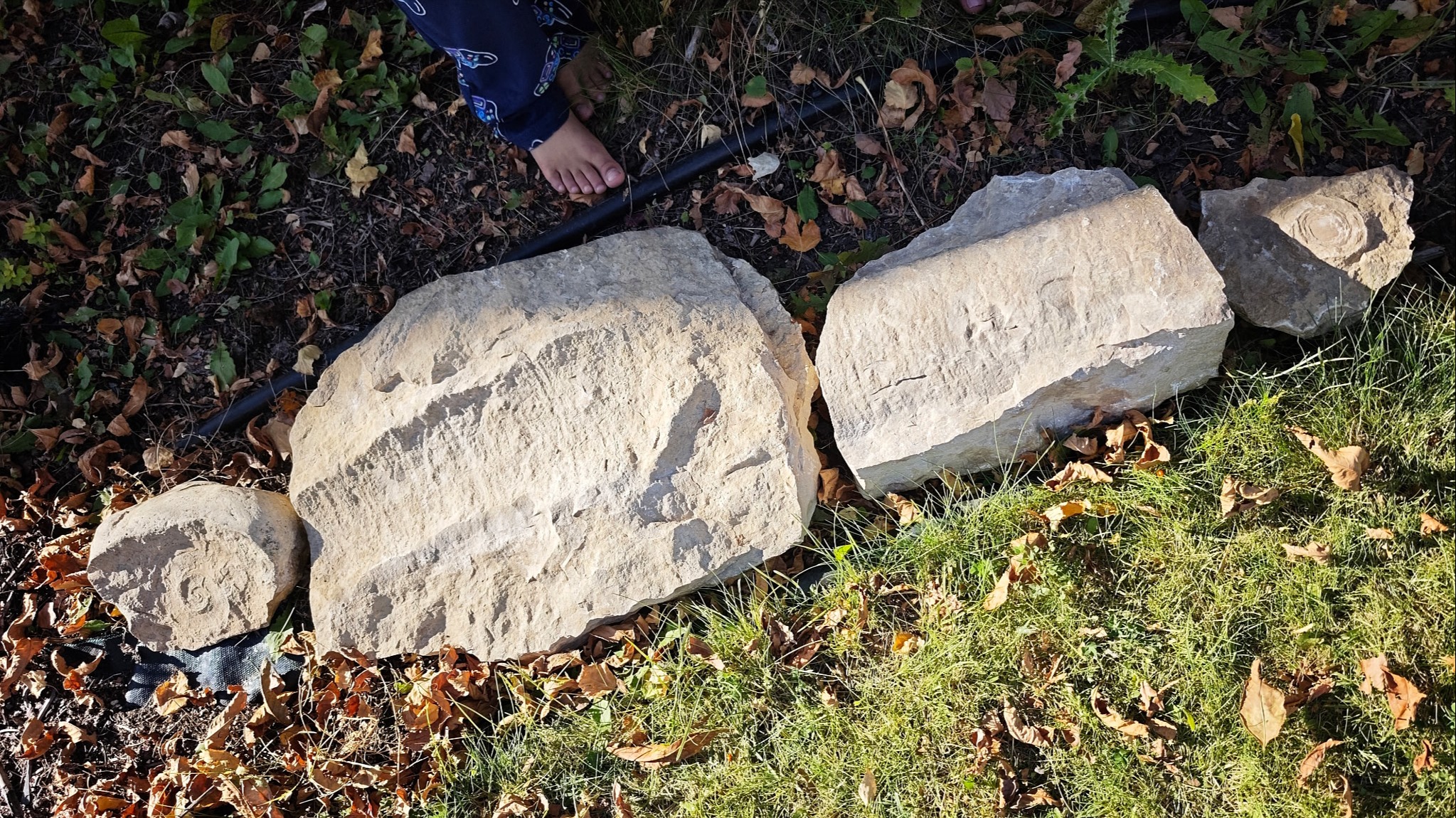
(Image Credit: Amanda Singh)
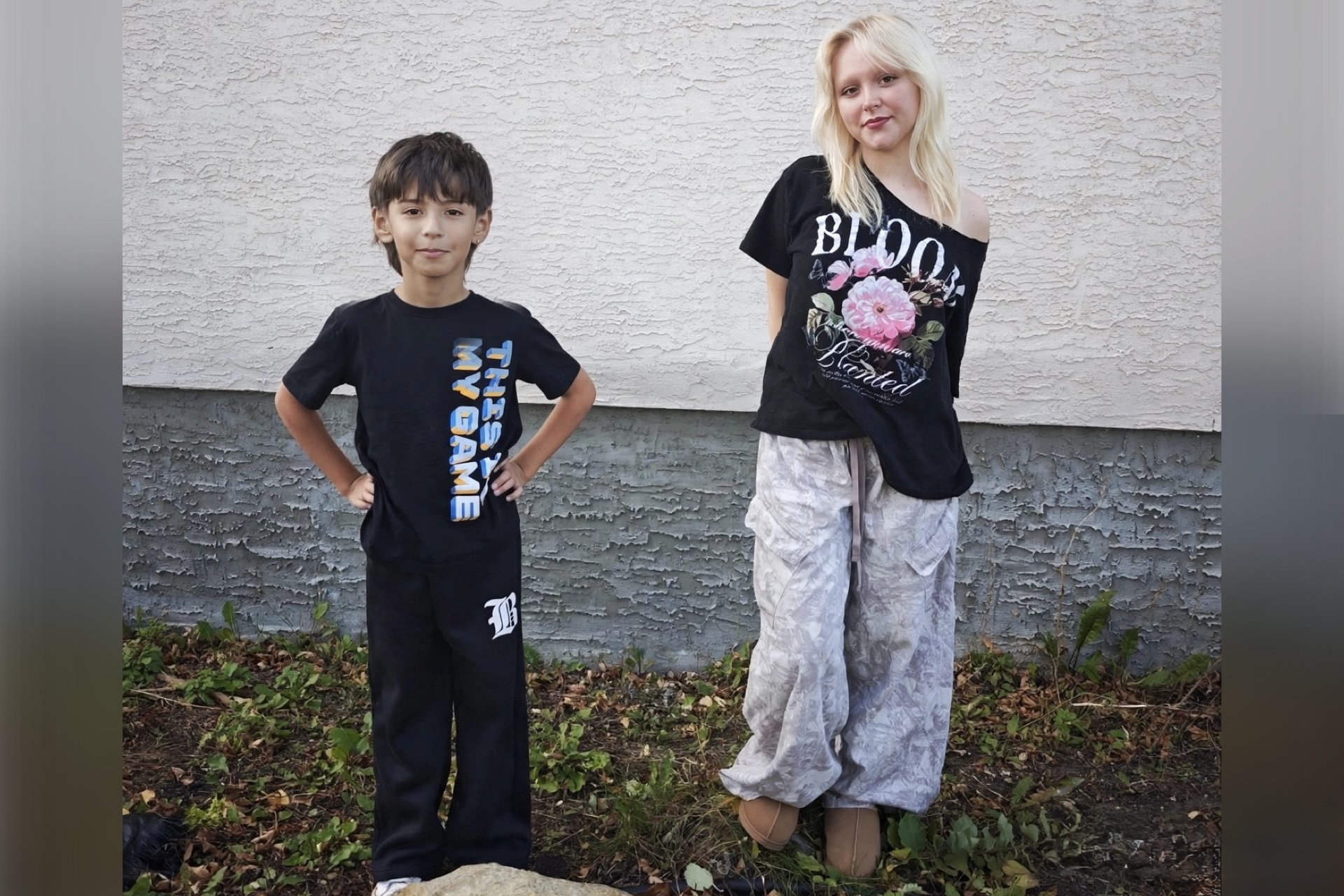
Oden Singh, eight, left, and his sister, Bailey Pearson, 16, found fossils in the Battlefords area that a museum curator says appear to be about 450 million years old. (Image Credit: Amanda Singh)
McKellar said the museum regularly hears from people who find this kind of material in fields or along riverbanks.
New records can help researchers understand which animals lived together and the conditions they lived in, he said. The museum keeps a reference collection of specimens from these limestone deposits.
“People coming from all over the world study fossils from Saskatchewan, and the collections built up largely by donations from the public or things that people have found and reported to us.”
For people who come across fossils, McKellar recommends taking photographs, recording the location and contacting the museum for advice. He generally discourages breaking open rocks when fossils are already visible on the surface.
Keeping a fossil in its surrounding rock or hillside can help researchers understand its place in geological time and the habitat it came from, he said.
“Once they come out of the rock or come out of the hillside, we start losing information as soon as that sort of stuff happens.”
Singh said the family was waiting for advice from the University of Regina before opening another rock.
She traces some of the children’s enthusiasm to family trips to Drumheller and its museums. Oden said he wants to become an archeologist, while Bailey is considering several interests, including astronomy.
“It’s so crazy to think that you’re looking at something that used to live that long ago,” Bailey said.
—