


Planes lift off quietly from the North Battleford airport – easy to miss if you’re not looking for them.
But inside some of those aircraft are students who have travelled thousands of kilometres, from places like Mongolia, Africa and Europe, learning a craft that could shape aviation safety far beyond Saskatchewan.
At the centre of it all is Fran de Kock.
After more than four decades building and teaching in agricultural aviation, the longtime pilot and founder of Battlefords Airspray is being inducted into the National Agricultural Aviation Hall of Fame, a recognition he said doesn’t belong to him alone.
“It was… very humbling,” de Kock said.
“I’m the figurehead here, but… my wife ran this company for 40 years… the award would be as much hers and my family and my staff as it is for me, although I’m getting the recognition.”
(Image Credit: Kenneth Cheung/battlefordsNOW)
De Kock’s path into aviation began in the 1970s in Alberta, where he earned his private and commercial licences before becoming an instructor. Early in his career, he built flight time hauling parts for farmers and oil companies and later flew in northern Saskatchewan, supporting operations that transported fishermen and firefighters.
In 1980, he moved to North Battleford with his wife and three young daughters, chasing a career that was far from guaranteed.
“My wife had faith in my dream,” he said. “And you know, the rest is kind of history.”
What followed was a training operation that would draw pilots from around the world to a small prairie city. Battlefords Airspray grew into a hub for flight training, agricultural aviation and forestry spraying and eventually into an international classroom.
“We’ve had students from… Mongolia and Africa and Europe and Australia and New Zealand and South America and the United States,” he said.
Many of those connections began at industry conferences, where de Kock introduced a training approach rooted not in simulation, but in experience.
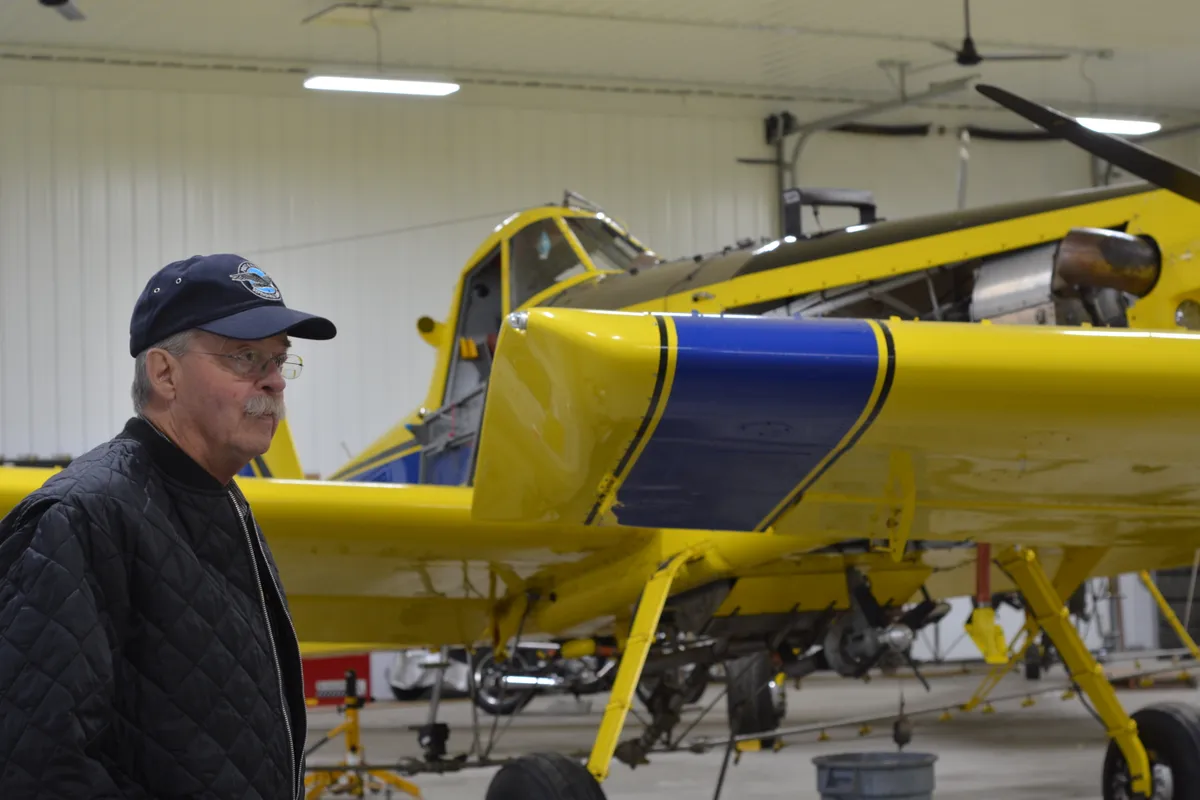
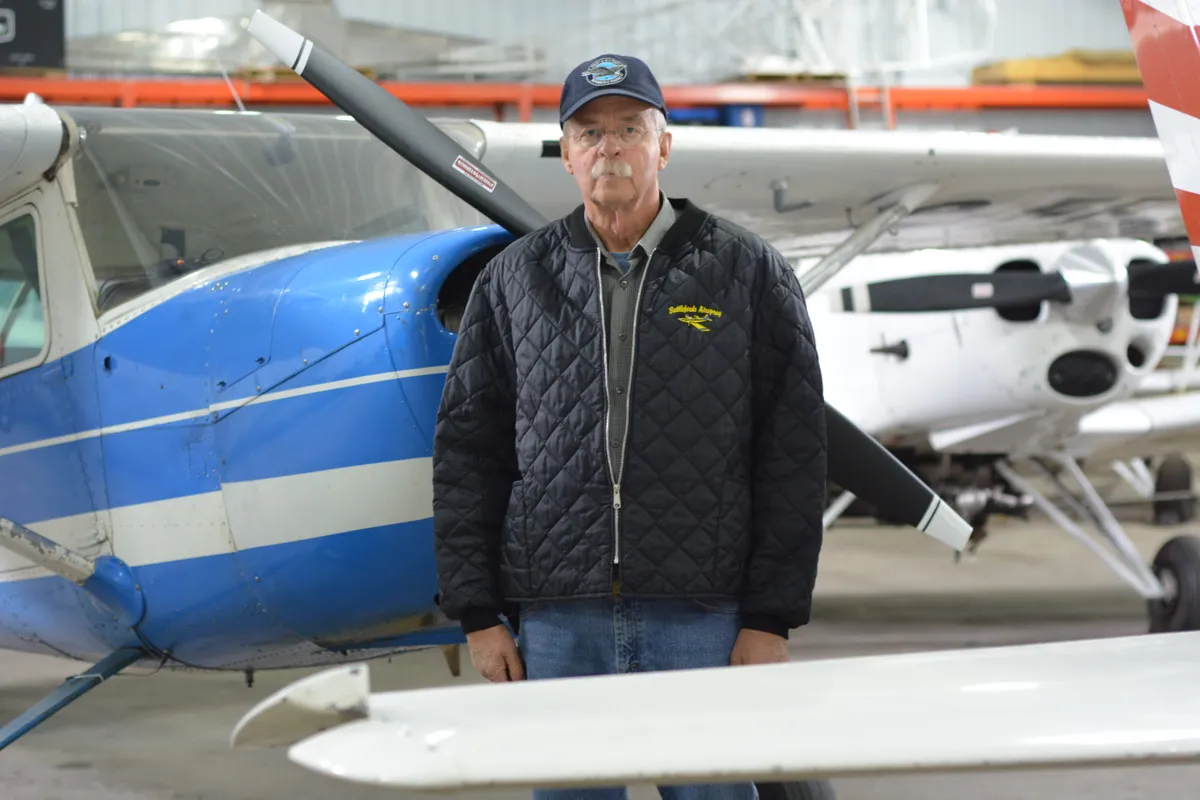
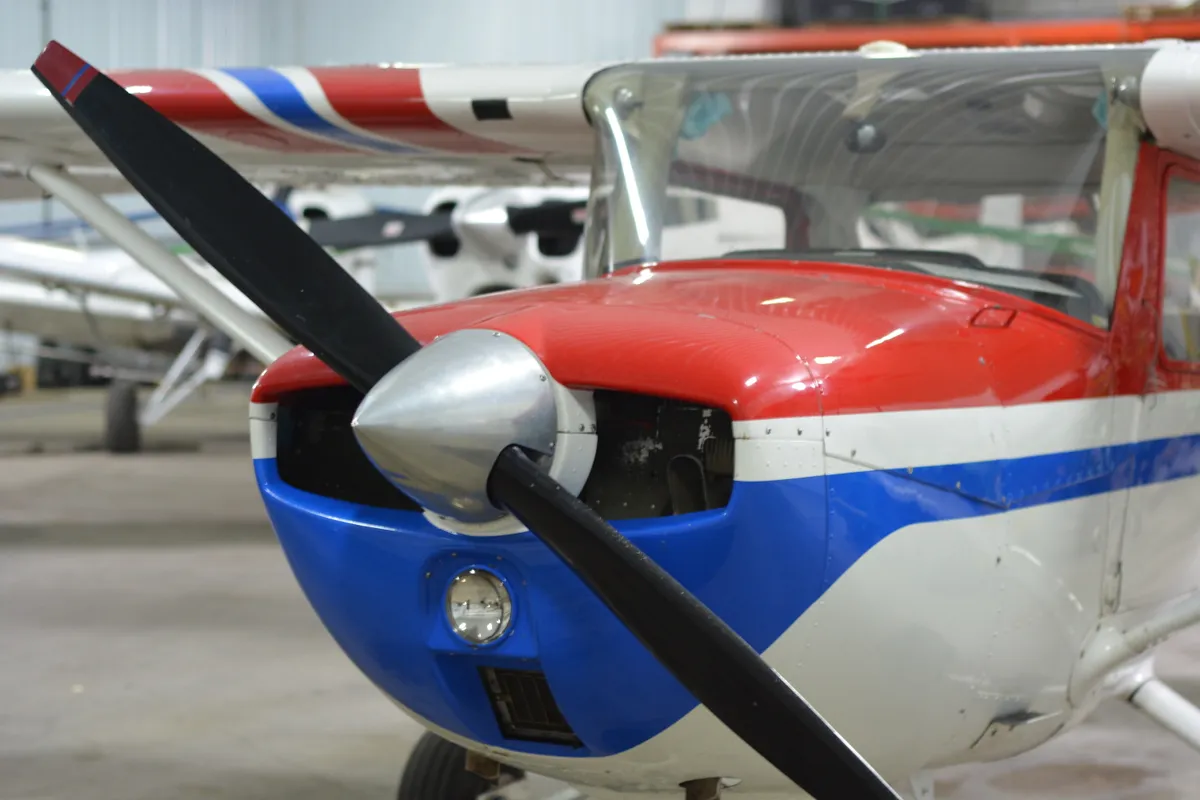
Over time, he developed a progressive system that moved pilots from basic aircraft into purpose-built agricultural planes. In 2001, he introduced the Gippsland GA200 to support side-by-side instruction, and in 2012 added the dual-seat turbine Air Tractor 504, helping set a new standard for hands-on training in the industry.
Students train in fully equipped agricultural aircraft – the same type they will eventually fly in their careers, learning the realities of the job from the very beginning.
Battlefords Airspray now runs the only program of its kind in North America, training agricultural pilots in dual-seat, fully functional aircraft, including four of the world’s seven GA200 dual-control planes based in North Battleford.
(Image Credit: Kenneth Cheung/battlefordsNOW)
(Image Credit: Kenneth Cheung/battlefordsNOW)
For de Kock, the achievement isn’t measured in hours flown, but in what gets passed on.
“The highlight continues to be the training,” he said. “The highlight… is definitely passing the knowledge on to the next generation of aviators.”
Over the decades, that philosophy has reached hundreds of pilots. He estimates nearly 500 students have completed initial agricultural training over the past 40 years, with roughly 250 more trained in turbine transition since 2012.
Behind that work is a constant focus on risk and reducing it.
“The number one driving force is safety culture,” he said.
When de Kock began, formal training in agricultural aviation was limited, and accidents were far more common. Today, he said, that has changed significantly.
“I dare say that… the accidents for initial, Ag pilots, probably are one quarter or one fifth of what they were 40 years ago,” he said.
The change reflects a broader shift in an industry where safety, cost and public expectations leave little room for error.
Beyond North Battleford, de Kock has also contributed to agricultural aviation organizations in Canada and the United States, leading safety training and seminars focused on helping pilots avoid common and often deadly risks.
His work has long been guided by a simple goal: helping pilots return home safely to their families.
Despite that global reach, much of the work has unfolded locally in a city many wouldn’t associate with international aviation training.
“It is… quite unique,” he said, noting that even some residents aren’t aware of the scope of activity at the local airport.
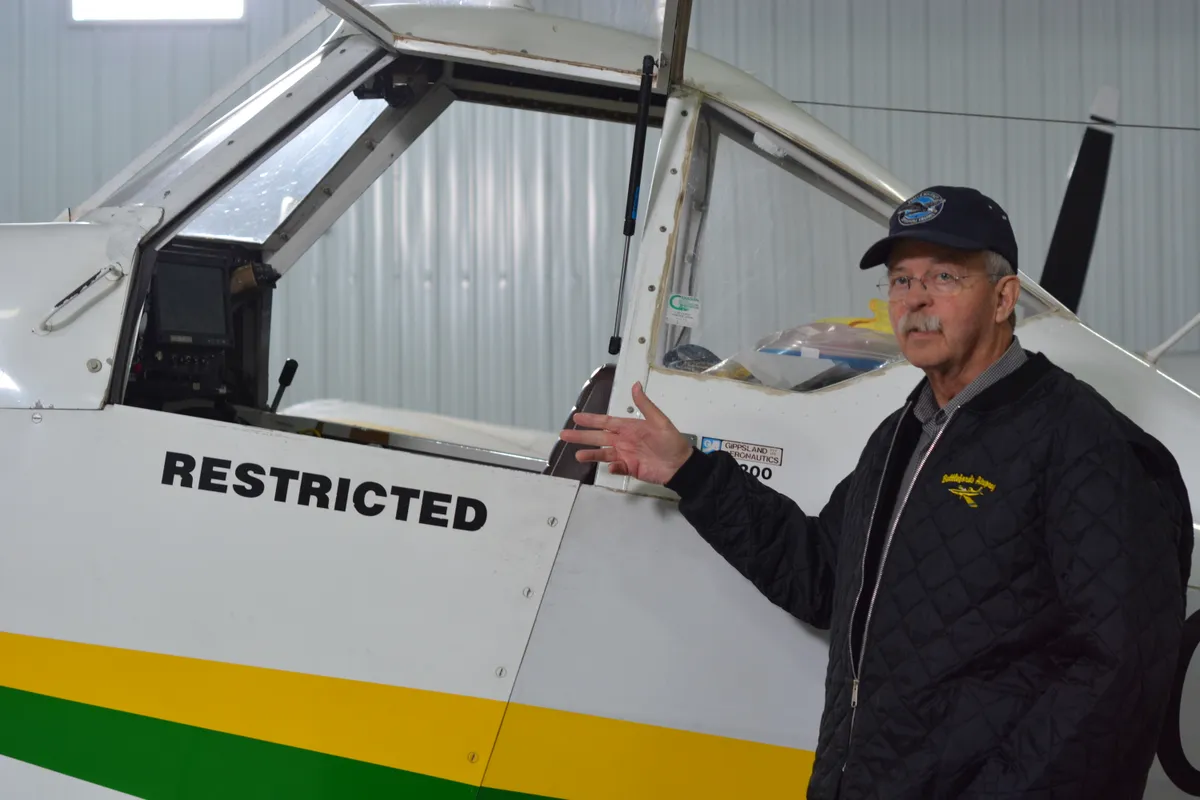
Fran de Kock poses with a GippsAero GA200 agricultural training aircraft at Battlefords Airspray in North Battleford. (Image Credit: Kenneth Cheung/battlefordsNOW)
Now 71, de Kock has stepped back from ownership after selling the company in 2021, but he hasn’t left the cockpit. He still instructs, still flies and still travels to teach at conferences, sharing what he’s learned with the next generation.
“I still feel privileged that I can continue to pass on the knowledge,” he said.
The company itself continues under new leadership, a former student, a transition that reflects the same cycle de Kock spent a lifetime building.
“I just take great pride in still seeing our legacy continue,” he said.
Back at the airport, the planes continue to rise and fall against the prairie sky – often unnoticed.
For de Kock, the work continues.
—
Kenneth.Cheung@pattisonmedia.com